
Major credit issuers, including the largest - HDFC Bank - have integrated their systems with the Bharat Bill Payment Systems (BBPS) for receiving credit card repayments via third-party applications.

To provide more choices to customers, the Reserve Bank of India has suggested mandating bank and non-bank card issuers to issue debt, credit and prepaid cards on more than one network. Customers can choose any one either at the time of issue of the card or anytime later, according to draft norms released by the Reserve Bank of India on Wednesday. The RBI said card issuers would also be barred from signing agreements that limit their ability to tie-up with other card-networks, according to the draft.

The Reserve Bank of India has updated its e-mandate framework, allowing card issuers to map existing mandates to reissued cards and clarifying rules around transaction limits and customer grievance redressal.
Credit card adoption is rapidly expanding beyond India's major metropolitan areas into Tier-II and Tier-III cities, driven by increasing incomes, digital awareness, and the integration of RuPay credit cards with UPI, according to a new report by SBI Card.

From April 1, 2026, the Reserve Bank of India's new authentication directions modernise how every digital payment you make must be verified -- and place the burden of security squarely on your bank, not on you.

ICICI Bank is seeking recoveries of at least 100 crore from fintech firms, alleging merchant misclassification of their business, a practice that has eroded the bank's interchange income. The dispute, lodged with global card network Visa, highlights growing discomfort among banks and intensified scrutiny from the Reserve Bank of India.


Markets regulator Sebi on Tuesday proposed introducing gift cards or gift prepaid payment instruments (PPIs) for investments in mutual funds to improve financial inclusion through onboarding of new investors in the space.
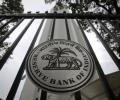
The Reserve Bank of India (RBI) has proposed several measures to develop a more conducive framework for the long-term growth of Prepaid Payment Instruments (PPIs), including enhanced transaction security and clearer rules on refunds and grievance redressal.

Fintech and enterprise technology firm Paramotor Digital Technology Ltd has confidentially filed draft papers with markets regulator Sebi for an initial public offering (IPO). The company submitted its draft papers under Sebi's pre-filing route, which allows issuers to keep details related to the issue size and other key information confidential until a later stage.
Credit card issuers saw significant erosion of their card base during the July-September quarter as the Reserve Bank of India's (RBI) norms mandated deactivation of cards that have been inactive for a year. The second quarter of the current financial year saw outstanding cards-in-force decline by 2.55 million to 77.7 million. Prior to this, the industry, on an average, was witnessing a net addition of over 1.5 million credit cards a month as players became aggressive on the unsecured lending business after the pandemic.
Reserve Bank has directed banks to provide their eligible customers with an option to choose from multiple card networks at the time of issuing credit or debit cards, a move which will benefit card users. The central bank also asked issuers of credit cards not to enter into any arrangement or agreement with card networks that restrain customers from availing the services of other networks.
For the past few months I have had some hilarious and some utterly infuriating experiences with banks and credit cards and thought of sharing them with you: not just to vent my frustration, but also to ring a warning bell. Please be careful, please read your credit card statements properly, and also please keep a record of all the freebies (read 'life-time free card' offers, etc) that banks promise.

Credit card spending reached Rs 2 trillion in October, a 14.5 per cent rise from September, largely driven by festival season purchases. However, the volume of outstanding credit cards increased only marginally during the same period. The spike in spending comes at a time when nearly all major credit card issuers are calibrating their growth in the segment due to visible signs of stress.

Mastercard and Visa are introducing passkeys that will allow users to authenticate card payments with face scans or fingerprints, eliminating the need for one-time passwords (OTPs).

The Reserve Bank of India (RBI) has introduced its 'Payments Vision 2028' document, outlining initiatives to enhance digital payment security, introduce electronic cheques, and expand regulatory oversight to include e-commerce entities.
The Reserve Bank on Thursday asked card companies not to issue unsolicited credit cards or upgrade an existing card without the explicit consent of the customer, failing which they will have to pay double the billed amount as penalty. It also asked card issuers and third-party agents not to resort to intimidation or harassment during recovery of dues from customers. In its master directions on credit card and debit card issuance, the RBI said "the issue of unsolicited cards/upgradation is strictly prohibited".

Credit card spending in September recorded strong growth of 25 per cent year-on-year (Y-o-Y), marking the highest increase in six months. Even as many banks saw higher slippages during the July-September quarter of 2024-25, spending growth exceeded 20 per cent for the first time since February. According to the latest data released by the Reserve Bank of India (RBI), September spending reached Rs 1.76 trillion, compared to Rs 1.42 trillion in the same period a year ago. In August 2024, credit card spending was Rs 1.68 trillion.
The Reserve Bank of India (RBI) on Monday issued new norms to regulate the fast-growing pre-paid cards industry and asked all the entities to comply with the guidelines within three months.

With rising disposable incomes in cities beyond metros, the penetration of credit cards - and consequently, credit card spending - is growing at a much faster pace than in traditional metro cities, primarily driven by e-commerce spending.
Recent RBI data indicates net addition of credit cards is running strong at 18 per cent year-on-year (Y-o-Y), but growth in credit card limits is ahead of loans outstanding. Growth in lower limit cards is decelerating fastest. The West and South have more usage and online transactions are more popular than offline, with metros leading growth.
Credit card spending dropped 11 per cent sequentially in November at Rs 1.15 trillion, but topped Rs 1 trillion for the ninth month straight, data from the Reserve Bank of India (RBI) showed as the festive season ends and consumption activity slows down. Year-on-year (YoY), spending was up 29 per cent. Card spends have consistently topped the Rs 1 trillion mark, led by the rising share of e-commerce transactions.
The net credit card additions in the banking sector nearly halved to 2 million in the first quarter of the current financial year (Q1FY25) from the previous quarter due to seasonal and regulatory factors. According to the Reserve Bank of India (RBI) data, the net credit card additions during the April-June quarter of FY25 stood at 2 million, 48 per cent lower than 3.9 million in the December-March quarter of FY24.
After a sequential fall in November, due to high base and waning of the festival season effect, credit card spends have picked up again in December, recording over Rs 1 trillion for the 10th consecutive month. Latest figures released by the Reserve Bank of India (RBI) show that credit card spends in December 2022 touched Rs 1.26 trillion, up 10.21 per cent compared to November. And, on a year-on-year (YoY) basis, spends were up 34.31 per cent during this period.
The Reserve Bank of India (RBI) has relaxed card-on-file data storage norms pertaining to guest transactions checkout, whereby now, apart from the card issuer and the card network, the merchant or its payment aggregator involved in the settlement of the transactions can save the data for a maximum of T+4 days or till the settlement date, whichever is earlier. And, acquiring banks have been permitted to store the card-on-file data until January 2023 for handing other post-transactions activities. The industry reached out to the RBI on the issue and sought a solution.

This marks a 67% increase from the Rs 2,537 crore lost in scams in 2022-2023.

Some of the most common grounds on which card issuers reject credit card applications in India, along with tips on how to overcome these hurdles.
The Reserve Bank of India's (RBI) new rules for credit and debit cards came into effect from October 1. These include tokenisation, one-time password (OTP) for activation after 30 days, written permission for enhancement of credit limit, and greater clarity on interest calculation.

SBI Cards, like most other credit card issuers in the country, suffered losses during the financial crisis of 2008-09 due to sharp increase in delinquencies. The company, a joint venture between State Bank of India and GE Capital, turned profitable in 2010-11. Kadambi Narahari, chief executive officer, shares the strategy to grow the company's cards business in coming years.

In a bid to ensure security of card data, the Reserve Bank of India (RBI) has enhanced the scope of tokenisation and permitted card issuers to act as token service providers (TSP). Under tokenisation services, a unique alternate code is generated to facilitate transactions through cards. The RBI on Tuesday extended the device-based tokenisation to card-on-file tokenisation (CoFT) services, a move that will bar the merchants from storing actual card data. Card-on-file refers to card information stored by payment gateway and merchants to process future transactions.
Credit card spends in June, although down marginally month-on-month (MoM), remained above the Rs 1-trillion mark for the fourth consecutive month. In June, credit card spends topped Rs 1.09 trillion, down 4.34 per cent MoM, revealed the data released by the Reserve Bank of India (RBI). However, on a year-on-year basis, spends were up 73 per cent. In May, credit card spends hit an all-time high, reaching Rs 1.14 trillion.
The modern credit card was the successor of a variety of merchant credit schemes. It was first used in the 1920s in the United States, specifically to sell fuel to a growing number of automobile owners.

While you go about it, please note that if it is difficult for you to keep your spending habit in check, all the benefits of getting a credit card limit increase will be pointless.
SBI Cards, the second largest issuer of credit cards, has topped the list of complaints from credit cardholders, with the banking ombudsman receiving 2,654 complaints against it. ICICI Bank, the largest credit card issuer, with 1,451 complaints follows SBI Cards in the list.

In a recent clarification, the Central Board of Indirect Taxes and Customs (CBIC) provided insights into the goods and services tax (GST) treatment of transactions involving vouchers. According to the CBIC, vouchers can be categorised into two types.

Banks have started charging customers for payment of credit card bills through cheque and so paying online makes more sense.
While Barclaycard, the card arm of the Barclays group, has informed some of the credit card holders that the cash limit has been reduced to zero 'to help manage the credit situation'. The new entrant to the cards business in India has sent text messages to card holders informing them about the change. A customer care executive said that the limit has been lowered for all card holders.

Several executives argue that UPI has the potential to grow tenfold, but warn that the absence of a monetisation model risks stagnating the real-time payments system, which has been recording all-time-high transaction volumes every year.

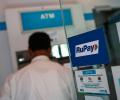
There will be no charge for RuPay credit card use on Unified Payments Interface (UPI) for transactions up to Rs 2,000 in line with the RBI direction, a recent NPCI circular said. RuPay credit card has been operational for the last four years, and all major banks are enabled and are issuing incremental cards for both commercial and retail segments. "During credit card on-boarding on the apps, the device binding and UPI PIN setting process shall include and be construed as customer consent for credit card enablement for all types of transactions," the circular dated October 4 said.
